I’m writing this in the weeks leading up to the Aquarius eclipse of February 17, 2026, with my attention already stretching ahead to the Leo eclipse we’ll witness under the dark skies of Montsec, Spain.
In Babylon, astrology was a practice of patience.
Knowledge of the sky was passed from father to son, teacher to apprentice, not as theory but as vigilance. They stood together on rooftops and temple platforms, memorizing the horizon, watching the wandering stars night after night. Meaning didn’t arrive all at once. It emerged slowly, through repetition, through seasons, through decades of shared attention.
This idea of the long watch has always felt familiar to me.
Years ago, during a reading, I was told I had once been part of a father–son astrology team in Mesopotamia. I didn’t know what to do with that information at the time. I didn’t try to prove it or build a story around it. It just resonated as I connected with being a part of a long game watch. Then I read Astrology in Ancient Mesopotamia; The Science of Omens and the Knowledge of the Heavens by Michael Bagiant and discovered that this was in fact the case.
Later, when I began studying ancient astrology more deeply, I noticed something unexpected. The sky didn’t feel foreign. The logic of omens, the patience required, the emphasis on watching rather than predicting — it all felt intuitive, as though I was remembering a rhythm rather than learning a system.
Whether this is memory, metaphor, or something else entirely doesn’t matter to me anymore. What matters is that astrology has always come alive for me through experience, not abstraction. Through staying with the sky long enough for it to speak in its own way.
This is something our modern relationship with astrology often misses.
We inherit the calculations, but not the continuity. We know the dates, but not the waiting. We read interpretations, but rarely stand still under the stars long enough for meaning to arrive on its own.
Babylonian astrology wasn’t about mastery. It was about responsibility — to the sky, to the lineage, to those who would come after. You didn’t just watch for yourself. You watched so someone else could continue the work.
That kind of attention changes you.
And I suspect this is why eclipses mattered so much to them. An eclipse wasn’t an event to be consumed. It was a rupture in the familiar order — something to be witnessed together, recorded carefully, and understood only over time.
In my recent post on the equinox, I mentioned the energy lines going through three important cities – London, Rome and Washington.
As it turns out, I had a chance to be in Rome for the fall Equinox and Virgo Eclipse.
Clan Mother Worldwide’s Sacred Sky Substack is a reader-supported publication. To receive new posts and support my work, consider becoming a free or paid subscriber.
In my equinox post, I mentioned that geodetically, the Ceres locational astrology line runs through Italy and is very close to Rome. Ceres is the asteroid associated with mothering and the nurturing principle. It also symbolizes “protective forces that foster growth and development”. In my astrology software program (SolarFire), it says that “Ceres has a distinct bearing on the well-being of ordinary people, and research has proven it is one of the most important fundamental symbols of the spirit and practice of democracy”. I’m unsure of the exact research that was done to demonstrate this… but it seems to ring true. Ceres seems to illustrate how we care for one another in relationships and in society. Food security and nurturing are positive expressions, while smothering or devouring are negative ones, not just in families, but also in our power structures. Indeed, how we are mothered has a powerful impact on how we view and operate in the world… we bring our fulfilled or unfulfilled mother needs to our work, intimate relationships, and our communities.
When you look at our world and how power structures operate… You see it perfectly. The mother is out of balance.
Our visit to Rome provided us with these themes, and we had a chance to bring healing to the imbalanced mother, raging mother, as well as the divine mother, Mary! Mary is an archetypal symbol of the Virgin in Catholicism. And, what better time for this healing than at the eclipse at the 29th degree of Virgo, the Virgin!
Our trip was perfectly coordinated by the universe and our guides… the theme of Mother was guided, protected and alchemized by the Porta Alchemica, healed on Tiber Island and anchored at the ancient Etruscan Tempio di Demetra, Demetra being the Greek version of Ceres.
It was not easy! The energy was thick, confused, frustrated and circular. There was a train/metro strike to frustrate our process, poor cellphone coverage and constantly drained batteries – a metaphor? Everything took 4 or 5 times longer than it should have. We saw nothing of tourist Rome and seemed to be only focused on the task. To be sure… we didn’t even realize until midway through that we were there to work!
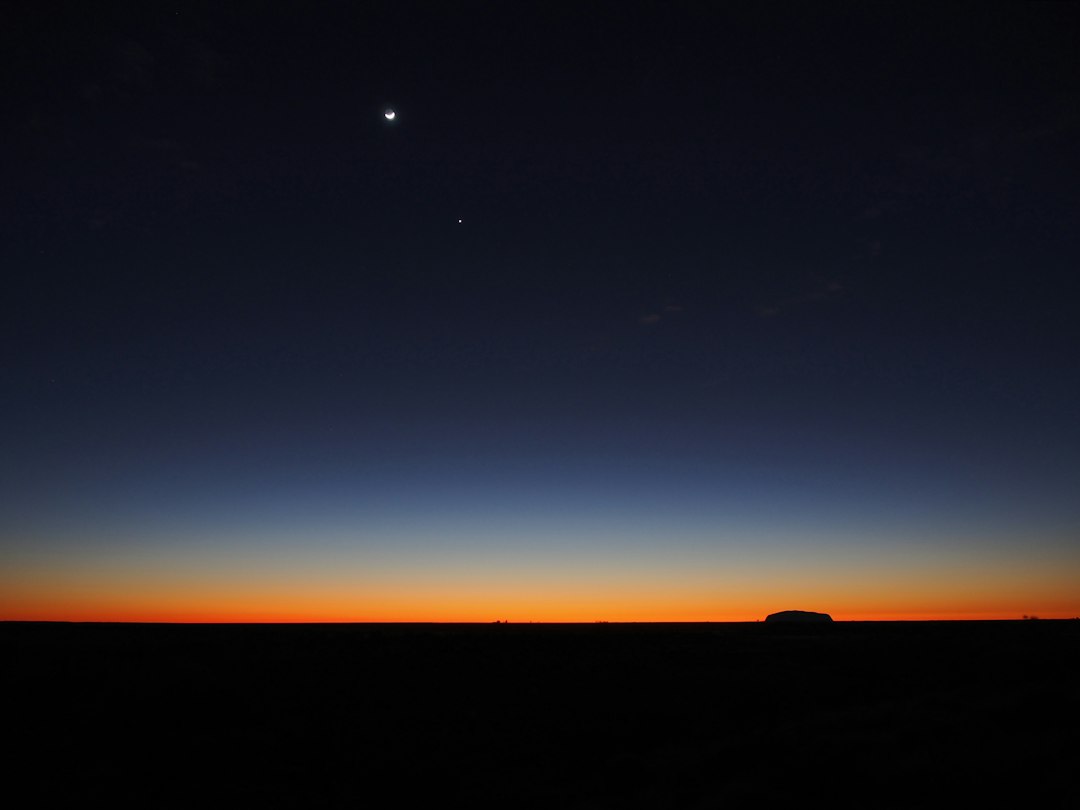
Our host was Simon, the author of the Tychos! We were grateful to have been invited to stay at his villa situated on the hills of Frascati overlooking Rome. Magical moments included a perfect view of the Vatican, stunning view of the morning rise of the Venus, Moon and Regulus conjunction, breathtaking sunsets and a chance to view the sun setting through a telescope… the Sun looks wild through a lens! (also daily gelato and, of course, amazing Italian food!)
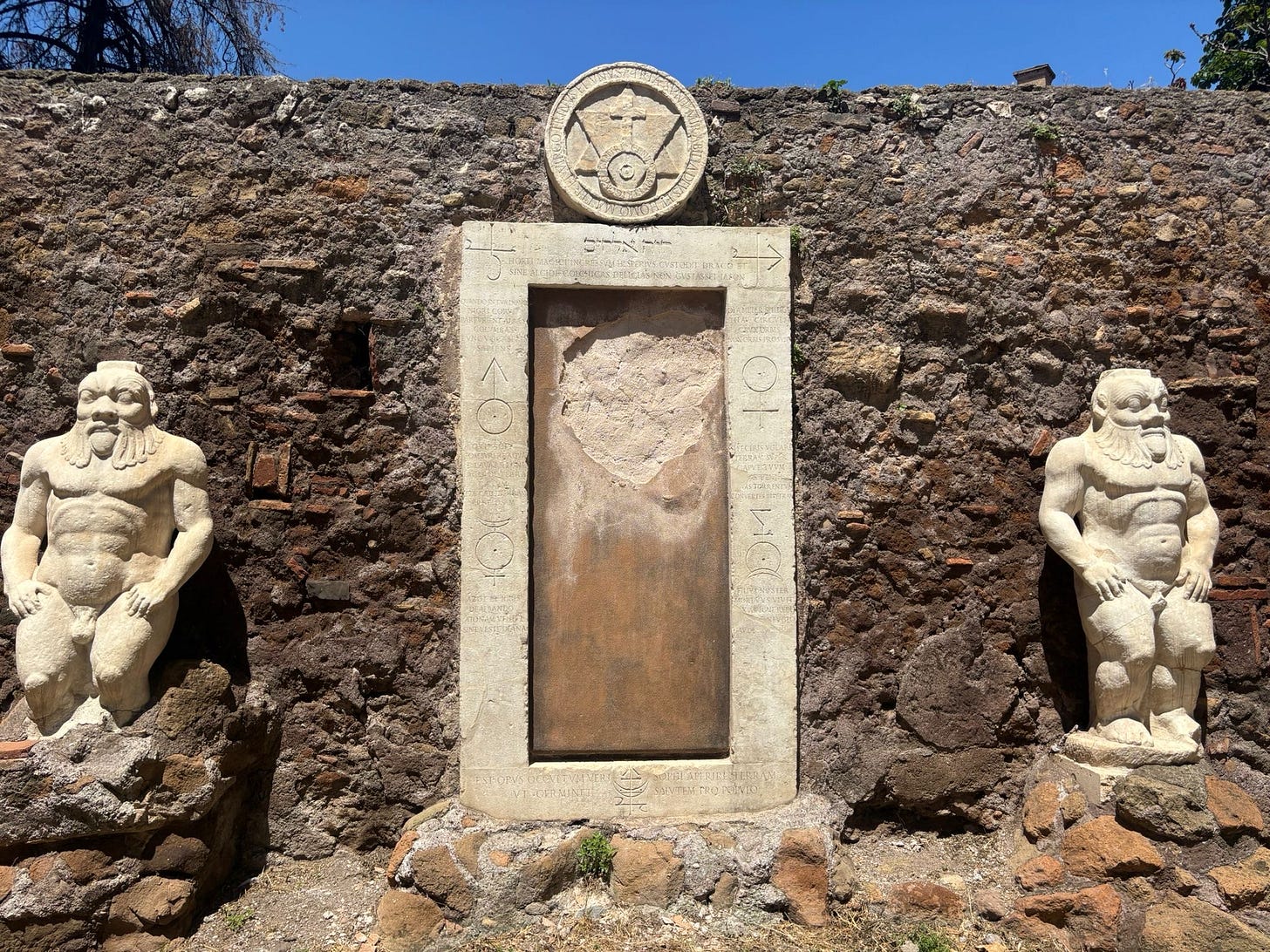
Our first important encounter was with the Porta Alchemica (Alchemical Door). Macca, who was travelling with me, sent an Instagram video of the door a couple of days before our trip, but when I asked her about it, she didn’t remember sending it. Strangely, she sent it to my personal account, something she usually does not do. So we figure it was angelic guidance! The two statues of Bes surrounding the alchemical door beckoned us as we walked by on the day before the eclipse. I recognized the door immediately… as it turns out, they would become our protectors and the alchemy needed to move through the dense, thick, circular and confusing energy present in Rome. I didn’t know it at the time, but Bes is the protector of mothers, childbirth and children. Bes was said to ward off evil spirits and protect families from misfortune and disease. Bes is also connected to music, dance, and festivities.
My photo’s taken through the locked gates
On the day of the eclipse, we visited Tiber Island. This island has a temple dedicated to Aesculapius, the god of healing. It is also the location of a powerful energy node. While there, a theme emerges around the impact of the imbalanced, devouring or disempowered mother and all of the ways that the distorted nurturing principle harms both men and women; the inability for boys to grow up and be real men – to properly individuate and lead – the momma’s boy (stereotypically Italian… but also shows up in all cultures), as well as the neglected, disapproved of boy child who is later destructive in the world. Girls who grow up to be overly responsible women and the resentment of women as mothers rather than wives in relationships. In Rome and in Catholicism, Mary is honoured. The feminine disappears in other Christian traditions, and yet even in Catholicism, it’s Mary waist up and Magedene waist down; the mother is relegated to the upper chakras, disconnected from her entirety. Mother or whore!
As we mediated, a couple of children appeared. Macca heard the boy say to his mom, “You know why I’m not afraid”… this was a good sign!
Macca shared a message about the role of Judas. Judas betrayed Jesus, but that was his role. He needed to be the catalyst for change. It encouraged us to look at any grievances we had against those who had harmed us (whether an unhealthy mother or an angry man) differently – as catalysts for change. Some of us felt pain in our backs and in our hearts, others in the lower regions/groin. Eventually, the pain shifted and lifted in us all… Panacea showed up.. The universal cure!
A message came through Amber, a woman who was there meditating with us; Mother Mary had to watch Jesus go through all that he did. Her role was to hold space and watch her adolescent son struggle and repeat patterns. Her role was to see him struggle, repeating patterns, rolling the boulder up the hill like Sisyphus. As a mother, her role was to stand back and watch him, her son, go through the pain on his way to growth. That is the role of the healthy mother.
We travelled to our last location the day after the equinox. Tempio di Demetra. It was another day of challenging transportation, and something that should have taken a short time took five times longer. Half our group arrived at the temple in the morning, and just as they left, Macca and I arrived. We found the temple hidden under large cave-like rocks. We lit candles and incense and sat in meditation. Inside the temple was one powerful spot. First, I sat there and then Macca. I pull out a crystal that I had been carrying with me through many locations dedicated to Mary and Mary Magdalene. A crack of thunder and lightning let us know we were complete. And then we had sun showers!
Working with astrology and energy nodes provides energy for accelerated healing. As we heal ourselves, we heal our world. At this moment in time, when society seems to be falling apart, the healed mother is a promise of a return to a balanced world. The daughter of Ceres/Demeter is Percephone in the Roman myth and Prosephina in the Greek… Proserpere is a Latin word that means “to emerge”
We are emerging from the darkness into the light. The mother is coming back into balance.
Before I end this post, I want to return to the alchemical door. By a strange twist of occurrence, I had with me, when I would not have normally, gold, silver and copper. The alchemy on the door speaks of us being assisted by the earth, its precious metals and their planetary relations! To me, this was a confirmation of my new foray into working with energy lines and locational astrology! Often, when we do a ceremony connected to the equinoxes, we will bring crystals and incense (which are made of plants), but this experience invited us to also bring in the use of precious metals, which are highly conductive and alchemical.
You too can work with this energy! If you are interested in having a reading to find out your personal locational lines, or how you can work with the present astrology and the energy of the earth in your sacred travel, individually or in groups, you can check out my offerings here.
Offering and Services
Secondly, in a synchronistic meeting at the airport, we met someone that Macca knew who had visited, mediated and obtained a perfect picture of the same alchemical door…. It is important to note that you cannot get access to the alchemical door, and the best we could get was a blurry side view of it. Earlier in the year, Elena had been meditating in front of the padlocked door and with her eyes closed, she heard the door unlock. It was a woman with high security-coveted access… the result was a perfect picture of the door! I would like to credit Elana for the picture; you can check out her work at elenadominguez.com. Elena is a Holistic Therapist and Shaman and works with Pachamama (Mother Earth).
About the alchemical door that the two Bes statues were protecting:
At the top of Porta Alchemica - Top roundel: “The center is in the triangle of the center. Three marvels: God and man; mother and virgin; three-in-one.” (Unity of opposites.)
Lintel (just under roundel): Hebrew Ruach Elohim (”Spirit of God”) + “The dragon guards the magic garden; only the true hero can enter.”
Right jamb (bottom → top):
Saturn/Lead: Black crows give birth to white doves = wisdom comes.
Jupiter/Tin: Geometry and symbols are useless to the uninitiated.
Mars/Iron: Burn with water, wash with fire = transformation.
Left jamb (top → bottom):
Venus/Copper: Make earth fly, transform torrents into stone.
Mercury: Azoth + fire = Diana revealed (silver purified).
Antimony: The dead son revives, returns from fire as king.
Threshold (sill): Palindrome: Si sedes non is (”If you sit, you don’t go / If you don’t sit, you go”).
Base: Hidden work of the true sage = open the earth so it brings healing.
Originally lost plate: Initials spelled VITRIOL
classic alchemical motto: “Visit the interior of the earth, and by rectifying, you will find the hidden stone.” it’s an alchemical doorway mapping the stages of transformation (black → white → red = rebirth) framed with mystical riddles
Templio di Demetra
If you ever make it to the temple, hold the crystal for informational downloads! If you are in Rome, send me a message for directions to the temple. It shows up on
In 2024, the great North American eclipse crossed directly over my Moon.
For those who live with the sky, that isn’t a minor thing. The Moon carries instinct, memory, the body’s knowing — the part of us that remembers before language. When I realized the path of totality would pass straight through her place in my chart, I felt the familiar fork in the road eclipses bring.
Do I stay inside, curtains drawn, honouring the old warnings? Or do I step beneath it — and let the sky meet me fully?
I chose to step outside.
I’ve learned over time that astrology doesn’t truly live in theory. It lives in encounter.
I’ve travelled for solar returns, followed angles across continents, tested how place reshapes fate. So this eclipse felt like the next listening. I went to Niagara Falls, staying with a friend, sharing the days with another astrologer, preparing carefully.
The ancients were not wrong to caution us.
Eclipses are not decorative events. They interrupt. They dissolve familiar light. They invite something older to surface.
Preparation, I’ve found, is what turns fear into reverence.
On the day itself, the sky began to change quietly — not dramatically at first, but unmistakably. My Moon rules my fifth house: children, creativity, wonder. As the light thinned, my friend’s four-year-old son asked me to read his favourite book.
The Whale’s Song.
I felt the pause land in my body.
The eclipse was unfolding in Cetus — the Whale — in Aries. The story tells of a whale who sings magical songs in exchange for gifts. The adults dismiss it. The child does not. She leaves offerings anyway. And eventually, the whale sings.
It’s a story about devotion without proof. About trusting what hasn’t yet revealed itself.
As the sky darkened, he listened with total presence. No fear. No story-making. Just instinct and wonder, intact. In that moment, it became clear to me: this is eclipse wisdom. Not analysis — remembrance.
Eclipses braid Sun and Moon. Ego and instinct. Conscious light steps aside so the deeper voice can speak. This is why they’ve always been both feared and revered. Each one arrives differently. None are random.
Today, we know how to protect our eyes and bodies. But eclipses don’t only work on the physical plane. Emotional, energetic, and ritual preparation matter just as much.
On February 17, 2026, another eclipse arrives — this time in Aquarius, brushing my ascendant. It won’t bring full darkness where I stand. But totality, over the coming years, will travel across places long considered thresholds: Luxor, Mecca, Ibiza, Bilbao.
You can avoid eclipses. Or you can meet them — slowly, consciously, with the land beneath your feet.
Because when darkness comes prepared for, it doesn’t take from us. It returns us to something we already know.
Under the dark skies of Montsec, Spain, in August 2026, we’ll gather along the path of totality — not to spectacle-chase, but to witness. The eclipse. The Perseid meteors. A rare planetary gathering. The sky, teaching directly.
If you feel the pause in your chest as you read this — if something in you leans forward rather than away — then you already understand the question eclipses ask.